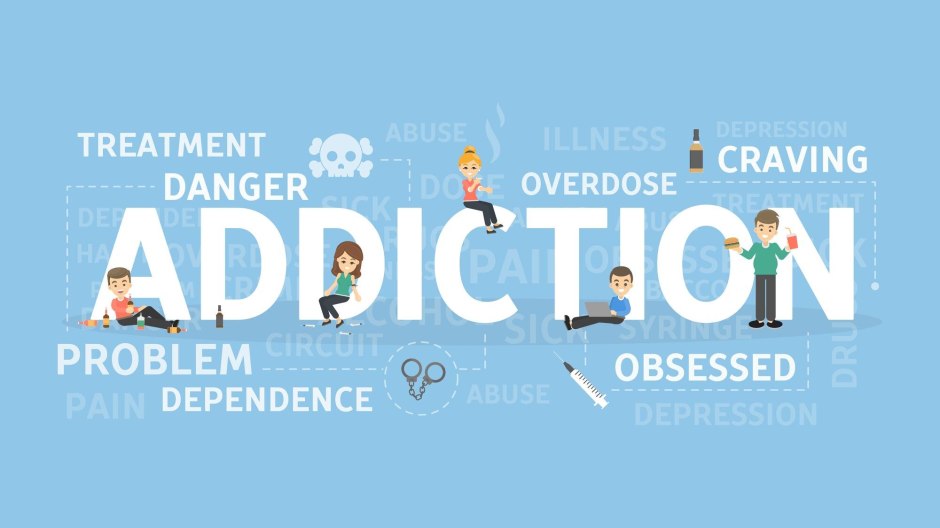
Modern advances in neuropsychology, computational neurobiology and reinforcement learning have explained and simplified the mathematical mechanisms behind addiction. In particular, models have described the process through which a person’s cognitive ability to avoid drug consumption is hijacked by sensation of reward and its anticipation. Even though the mechanisms are robust and intuitive in their explanation of perpetuation of addictive behaviours, is this explanation at a mathematical and computational level sufficient to explain the intricate details and pathology of addiction? In this article, I take a philosophical look at the topic of addiction and argue that the brain machinery and circuits involved in perpetuation of addiction are the consequences and not the cause of addiction.
From a psycho-somatic view, any organism can sense a lack within, and normally it strives to satiate itself to pacify this lack by a process known as homeostasis. Commonly, the need for homeostasis has been considered in the domain of biological, sexual, physical aspects. The conversation on homeostasis in the realm of emotional fulfilment is still incipient and in a nascent stage. Despite the progress in the field of neuropsychology, clinical biology and even psychoanalysis, and psychotherapy, addiction has only been rapidly rising in our contemporary world. Is the solution an external manipulation of internal brain circuits, so as to numb them and hence incapacitate the internal wirings for better outer outcomes? Or is it something about addiction that we are not able to observe?
Let us begin from the beginning!
Any kind of feel-good behaviour before becoming an addiction starts off as a desire for pleasure, and to avoid pain. Certainly, the human feels an acute lack of a sense of deep fulfilment, and simultaneously experiences a sense of helplessness in changing their external situation. The desire to feel better instantly, but the inability to change the circumstances puts him in a torn situation – an uncomfortable psychological experience. The only way out, for most, if not all, is to satiate the desire to feel better by temporarily forgetting the helplessness in changing the external environment. A transient pleasure, in the circumstance of imminent despair.
The despair may be short-lived, but the extent of its impact on the person may be so huge that he/she may forget that it is short-lived. The need is to immediately escape from this feeling of discomfort and instead replace it with euphoria. The irony however is that “what is resisted, not only persists but also becomes bigger”. Thus, what began as a means to feel better in the helpless and dire situation, does not solve the root problem, but in its own snowballs into a bigger and separate problem altogether. And now we have two problems – the primary problem which one wanted to escape from through chemical stimulation, and the other of over-attachment to chemical stimulation as a means to avoid pain and feel pleasure chronically.
Addiction, in my view is not just brain circuitry paralyzed in front of over-stimulation, although it is what happens at the biochemical level. Addiction is a constant chasing of a mirage believing that it as an actual reality within grasp. This belief actually keeps the addiction constant. But why this belief of actual reality of sustainable pleasure? Humans are hardwired to avoid pain and embrace pleasure, everyone tell us this. But not everyone knows the authentic purport of pain and pleasure. And addiction is mostly borne out of pain that one thinks they cannot solve and is left to bear, and does not want to bear. For e.g. a poor man is addicted to alcohol or smokeless tobacco, because their extent of despair is beyond hope. A rich man is addicted to substance and drugs, because their richness and wealthy has failed to fulfil the penury in their hearts, or rather reminded them of it. A middle-class man occasionally dabbles with substances like drug, smoke, chemical stimulants, but he lies between the extremely poor and extremely rich.
No matter where one lies in the socio-economic ladder, we all strive for happiness in our own ways guided by how we perceive happiness. Addiction, is thus not only a cognitive conflict but it is a unrelenting chase of happiness, through external means, but only ending up in deeper chasms of pain. The root of addiction or its perpetuation lies in a deep disconnect of the human with the internal roots of happiness, pleasure and content. And until this disconnection is healed, addiction will persist; it may change forms and manifest in different manner(s), but might still be there. Thus, addiction is really a deep psycho-emotional-spiritual problem, not just a cognitive conflict.
The cognitive conflict is the consequence of the division between the attachment towards pleasure and knowledge of the harmful effects of addiction. Between these two choices, the fallible human often chooses the former. This is a classic human helplessness that is true for most of us; we are all fallible. The brighter side of looking at addiction as a cognitive conflict is that once we know the circuits, the internal circuits can be manipulated and controlled to overcome the addiction problem. This is similar to bariatric surgery to get rid of obesity, a much less complex example, but analogous in this context. But the approach begs the question of sustainability of intervention.
The danger of looking at addiction as merely a cognitive conflict is that the mechanisms that will be adopted to address it might follow a pharmacological approach, while missing out completely the emotional and psychological roots of addiction. To permanently solve addiction in a human being, an immense sense of warmth and acceptance is required, in parallel to the person’s willingness. Just like Watson helps Sherlock while being his sober companion, as he is on the road to de-addiction and gaining cognitive empowerment in front of potential alluring situations.
My view may be myopic, and is definitely not holistic, but I believes it lends some bits to the current discourse on addiction, taking it closer to wholesomeness. Addiction is the cry of a helpless human who wants to be happy and has not yet developed the sinew to brook the unfairness of life. Given the latter, I am surprised why everyone of us is not addicted, or perhaps we are. Only that few kinds of addictions are more lethal or condemnable than others. My only urge is to understand addiction as a wider problem not just limited to cognitive conflict, but that which involves the body, mind and the soul. From this point, we can begin to understand it broadly. And who knows overcoming addiction, may be a milestone in the goal of self-actualization? And I doubt it will be achieved if the current approaches attempt to solve addiction by limiting it to a cognitive conflict.
 Cognitive Neuroscience Lab @ BITSGoa